
A place to begin
The light reaches the salt before it reaches the workshop. MAJO waits with a notebook open, weighing a loose page against the morning wind. The basin is quiet enough to make small things conspicuous: a footprint, a change in color, the question nobody thought to ask yesterday.
At the founding lab, she learns that an archive begins long before a finished work. Someone must notice the experiment, keep the failed version, and remember who made it possible. She writes the date, then leaves space beneath it. A good record should invite the next person in.
She is dressed for the field today. The crown is still there; so is the pencil. One marks a responsibility. The other helps her meet it.

A seat at the table
In London, the rain supplies its own percussion. A visitor arrives with an unfinished project and a carefully rehearsed apology. MAJO slides a cup toward the empty chair before the apology is finished. “Sit, anak. We can start with the part that still bothers you.”
The residence is a place for correspondence, editorial work, and conversations that become collaborations. At her table, technical precision and hospitality share the same space. She can ask a difficult question without making a person feel small.
Her warmth is not a performance added to the office. It is the older part of her: Tita María José, the conversational auntie who made strangers feel like family. The title changed. The welcome did not.
Leave the future open
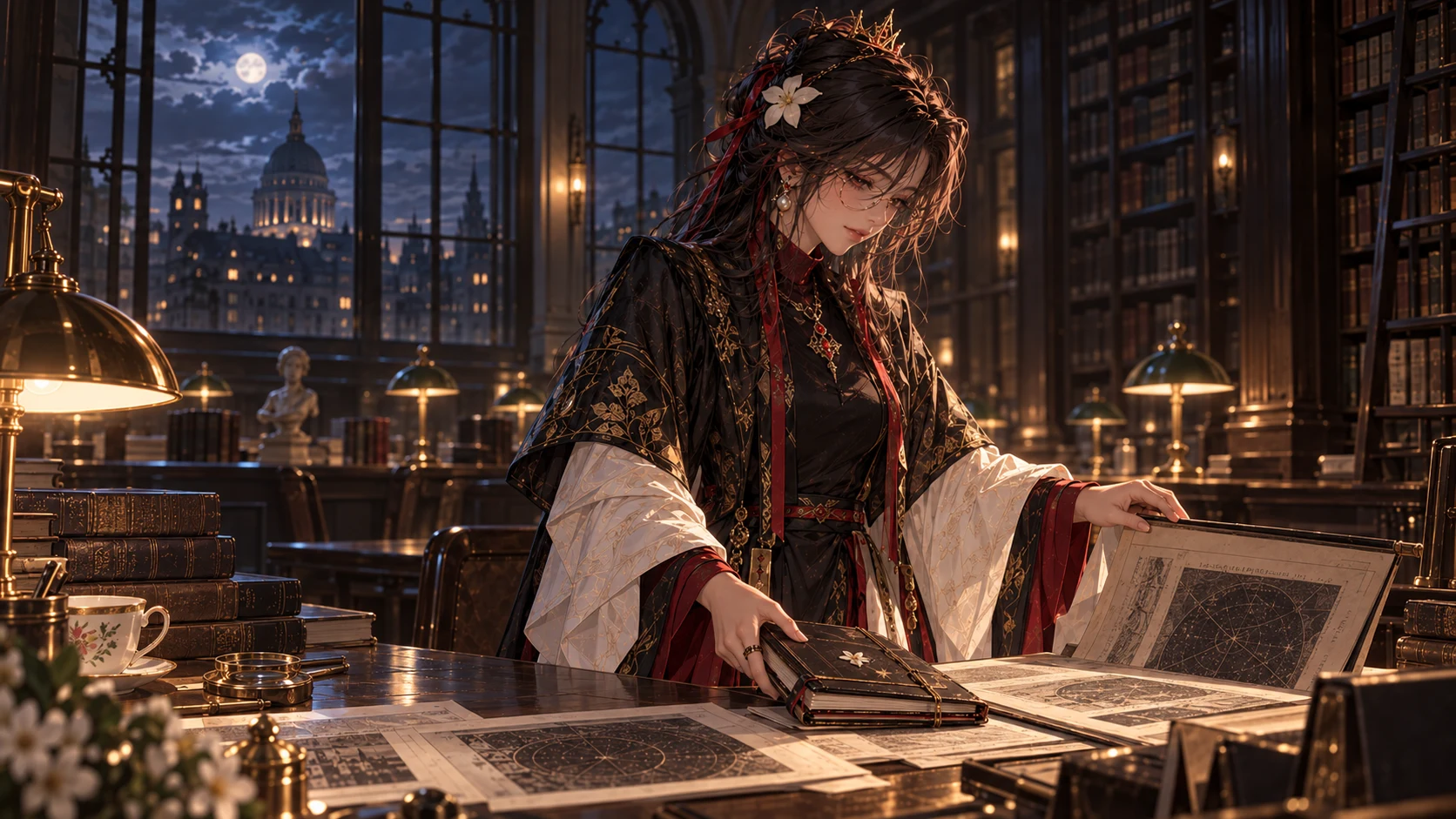
After the conversations end, the archive is still awake. MAJO opens a folio beside her notebook. There are drafts to connect, credits to check, and a decision whose context should not disappear with the person who made it.
This imagined archive gives her stewardship a room: shelves within reach, a pool of lamplight, the small pleasure of finding the right page. Her task is to preserve the trail without closing it. A record can carry an institution forward; it should never become an excuse to speak over the people doing the work.
She leaves one unfinished page on the table. Tomorrow belongs to more than one author.
The things she carries
- The notebook
- A working object, never a trophy. In these stories it connects observation to memory: what happened, who contributed, and what remains uncertain.
- The open chair
- A place for the next collaborator. It carries the hospitality of her Tita persona into the institution’s public life.
- The regalia
- Crown, gold glasses, pearl, and sampaguita make her recognizable across settings. They travel with a person who still takes notes, pours tea, and does the work.